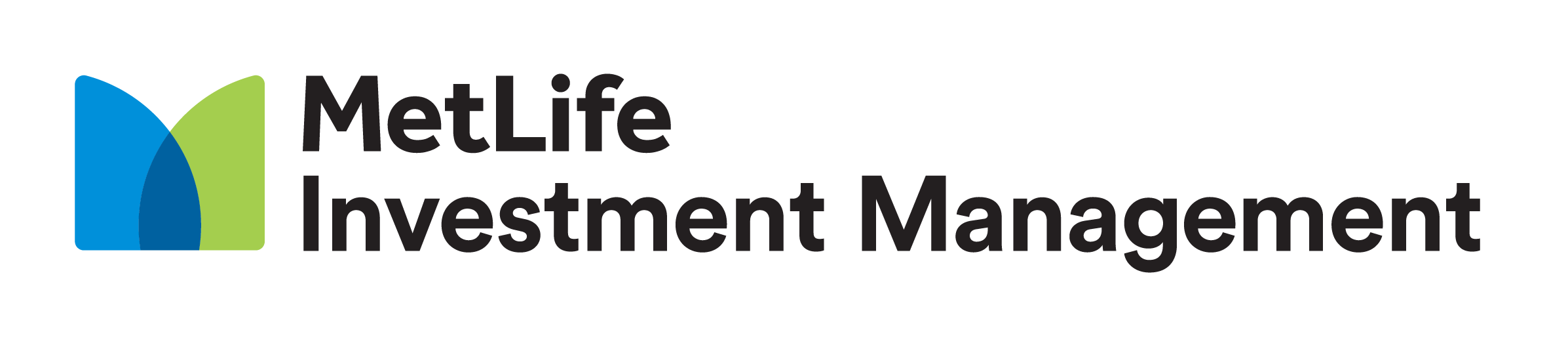
Recent data from Redfin show that residential inventory of homes for sale has been falling from 2025 highs. Some sellers have noticed tepid demand and are hesitant to move because they already have a locked-in, low mortgage rate. Buyers are wary due to economic uncertainty and mortgage rates that remain relatively high. Harsh winter weather also dampened sales activity in some parts of the country, even though price increases have recently been slower in some regions.
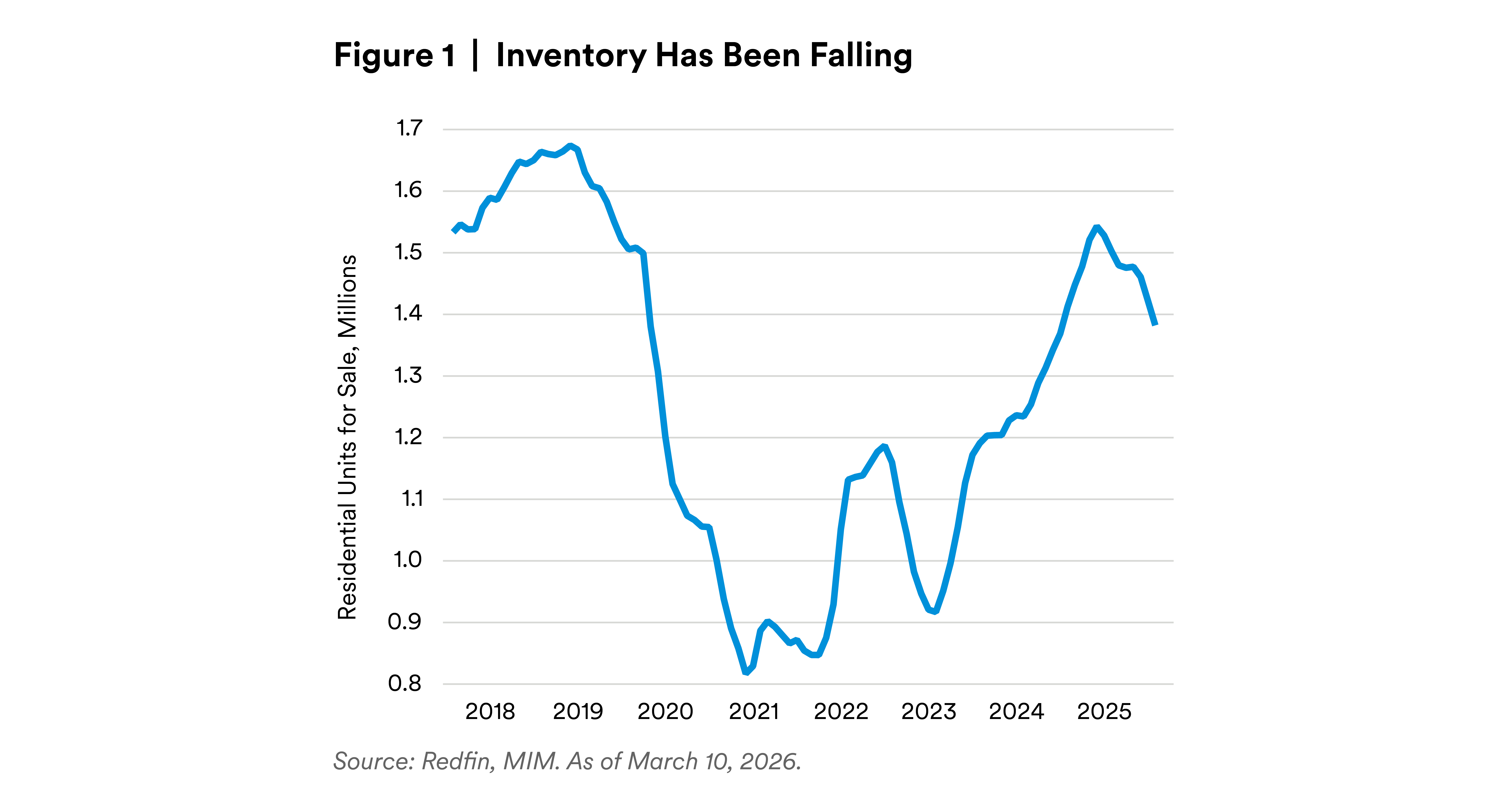
Even though housing market price pressures have abated in the last few months, affordability remains an issue.
The National Association of Realtor’s Housing Affordability Index reached 111.5 (after seasonal adjustment) in February. That marks an improvement that tracks the decline in mortgage rates (and the Fed’s cutting cycle). In October 2023, after the Fed finished hiking rates, the index was 90.6, implying that a family with a median income could not qualify for a median-priced home. Despite the recent improvement, affordability is a far cry from where it was pre-pandemic when the index was consistently above 140.
We do not see affordability improving quickly. Even if the Fed cuts rates two to three times more in 2026, mortgage rates will likely decline only modestly from where they stand today. Higher prices could continue to put pressure on the housing market, even as rates come down due to constrained supply.
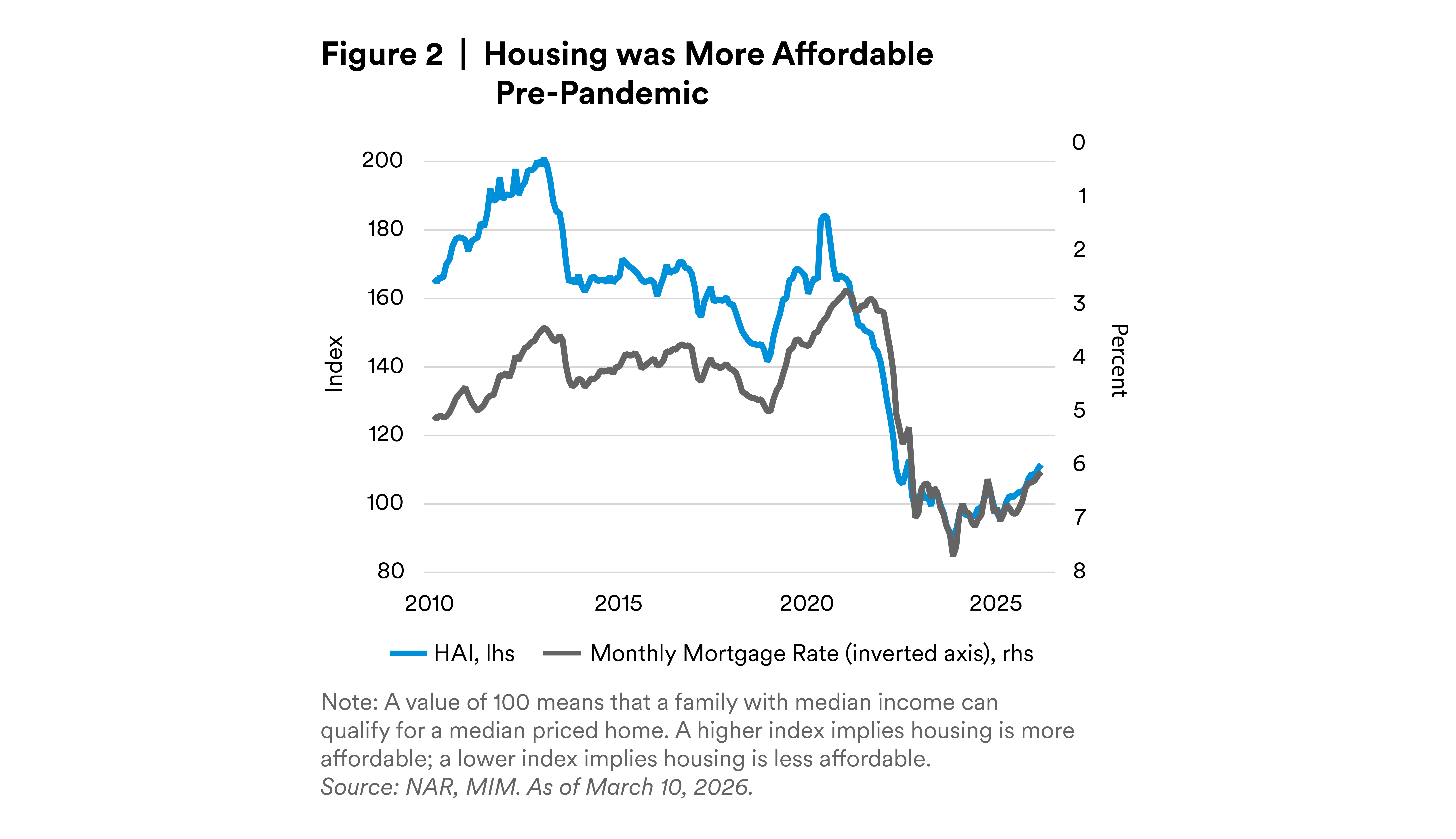
Real residential value added per household has actually declined after a brief post-pandemic spike. In Q4 2025, calculations using U.S. Bureau of Economic Aalysis and census data show real residential investment was $1,424 per household, down from a high of $1,809 in the first quarter of 2021.
Housing completions increased through 2022 and 2023, reflecting the 2021 burst in investment. Completions have stagnated since then, and starts and permits have fallen relative to 2021.
Lower rates have not yet resulted in much additional building, and the undersupply of housing is a broader structural issue involving land use and zoning constraints, higher labor and nonlabor input costs, and a decade of underinvestment after the 2008 financial crisis. These issues will likely persist for some time, since simply cutting rates further will likely not resolve them. To solve the supply shortage at its core and return to a “normally” functioning housing market, housing market participants, builders and regulators will all have to work together.
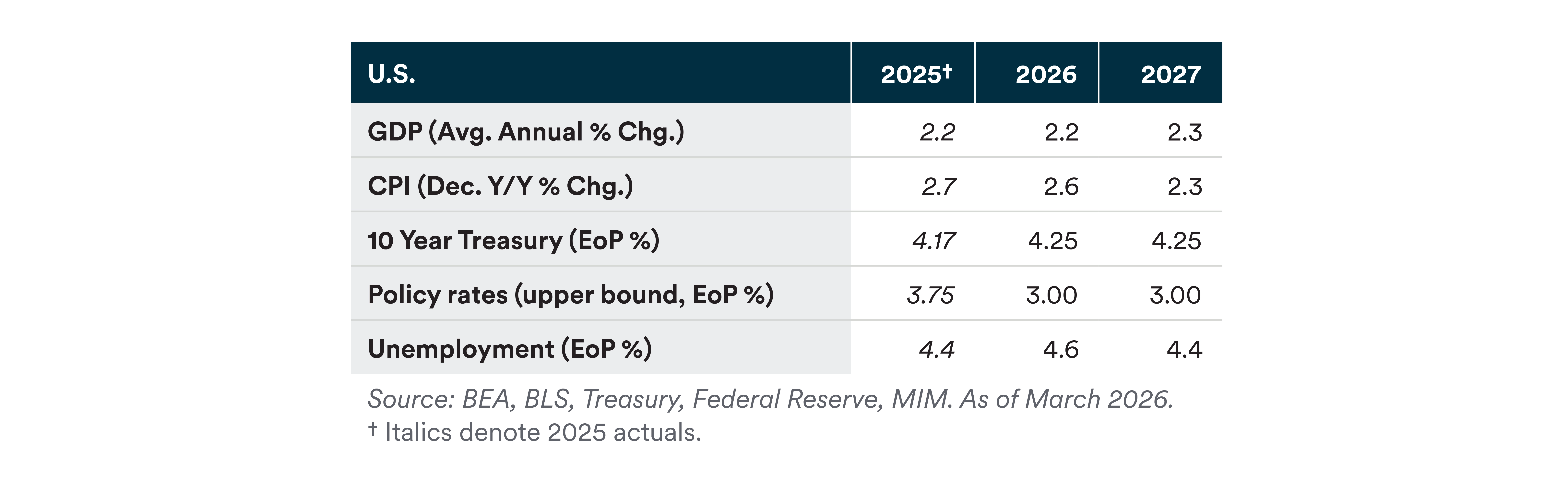
We expect 2026 GDP growth to be roughly in line with 2025, driven by moderate consumption and solid non-residential investment. We expect net exports to remain strong as U.S. businesses try to shift away from import-driven businesses. Tariffs remain likely to affect activity, as the Trump administration looks to implement new tariffs to replace IEEPA tariffs. We believe labor demand will remain lackluster in 2026. We continue to expect the Federal Open Market Committee to reduce rates by 75 basis points (bps) in response to the weakening labor market.
Risks to our forecast have risen substantially since the start of the conflict with Iran. The greatest threat to our base case is the substantial upside risk to our inflation forecast. If oil and other commodities continue to be disrupted beyond the initial four to six weeks of the conflict, we would expect headline inflation to rise by at least 25–50 bps over the year, while core inflation would rise by at least half that.
We see the risk to GDP growth as roughly balanced, with a rising probability of weakening growth. The conflagration between the U.S./Israel and Iran raises risks to the downside, specifically regarding the struggle to re-establish safe passage through the Strait of Hormuz and the risk of a widening — or lengthening — conflict.
We are also increasingly worried about the negative interaction effects with other macroeconomic trends: the interaction of higher energy prices with the high energy consumption of data centers; the interaction of higher gas prices with an increasingly stressed consumer; the interaction of greater uncertainty and already struggling non-AI investment; and concerns about AI valuations coupled with concerns about private credit.
Positive impulses — such as why we maintain a balanced view on GDP — include the continued strength of wealthier consumer balance sheets and the extraordinarily strong investment expectations in AI and AI-related sectors, as well as the windfalls expected in the oil and gas sectors and rising expenditures in the defense sector.
Endnotes
1 Bankrate.com U.S. Home Mortgage 30-Year Fixed National Average. As of March 9, 2026.
Disclosure
This material is intended solely for Institutional Investors, Qualified Investors and Professional Investors.
MetLife Investment Management (“MIM”) is MetLife, Inc.’s institutional investment management business. MIM is a group of international companies that provides investment advice and markets asset management products and services to clients around the world. The various global teams referenced in this document, including portfolio managers, research analysts and traders are employed by the various legal entities that comprise MIM.
All investments involve risk, including possible loss of principal; no guarantee is made that investments will be profitable. This document is solely for informational purposes and does not constitute a recommendation regarding any investments or the provision of any investment advice, or constitute or form part of any advertisement of, offer for sale or subscription of, solicitation or invitation of any offer or recommendation to purchase or subscribe for any securities or investment advisory services. The views expressed herein are solely those of MIM and do not necessarily reflect, nor are they necessarily consistent with, the views held by, or the forecasts utilized by, the entities within the MetLife enterprise that provide insurance products, annuities and employee benefit programs. The information and opinions presented or contained in this document are provided as of the date it was written. It should be understood that subsequent developments may materially affect the information contained in this document, which none of MIM, its affiliates, advisors or representatives are under an obligation to update, revise or affirm. It is not MIM’s intention to provide, and you may not rely on this document as providing, a recommendation with respect to any particular investment strategy or investment. Affiliates of MIM may perform services for, solicit business from, hold long or short positions in, or otherwise be interested in the investments (including derivatives) of any company mentioned herein. Views may be based on third-party data that has not been independently verified. MIM does not approve of or endorse any republication of this material. This document may contain forward-looking statements, as well as predictions, projections and forecasts of the economy or economic trends of the markets, which are not necessarily indicative of the future. Any or all forward-looking statements, as well as those included in any other material discussed at the presentation, may turn out to be wrong.
In the U.S.: This document is communicated by MetLife Investment Management, LLC (MIM, LLC), a U.S. Securities Exchange Commission registered investment adviser. MIM, LLC is a subsidiary of MetLife, Inc. and part of MetLife Investment Management. Registration with the SEC does not imply a certain level of skill or that the SEC has endorsed the investment advisor.
For investors in the UK: TThis document is being distributed by MetLife Investment Management Limited (“MIML”), authorised and regulated by the UK Financial Conduct Authority (FCA reference number 623761), registered address One Angel Lane 8th Floor London EC4R 3AB United Kingdom. This document is approved by MIML as a financial promotion for distribution in the UK. This document is only intended for, and may only be distributed to, investors in the UK who qualify as a “professional client” as defined under the Markets in Financial Instruments Directive (2014/65/EU), as per the retained EU law version of the same in the UK. © 2025 MetLife Services and Solutions, LLC.
For investors in the Middle East: This document is directed at and intended for institutional investors (as such term is defined in the various jurisdictions) only. The recipient of this document acknowledges that (1) no regulator or governmental authority in the Gulf Cooperation Council (“GCC”) or the Middle East has reviewed or approved this document or the substance contained within it, (2) this document is not for general circulation in the GCC or the Middle East and is provided on a confidential basis to the addressee only, (3) MetLife Investment Management is not licensed or regulated by any regulatory or governmental authority in the Middle East or the GCC, and (4) this document does not constitute or form part of any investment advice or solicitation of investment products in the GCC or Middle East or in any jurisdiction in which the provision of investment advice or any solicitation would be unlawful under the securities laws of such jurisdiction (and this document is therefore not construed as such).
For investors in Japan: This document is being distributed by MetLife Investment Management Japan, Ltd. (“MIM JAPAN”), a registered Financial Instruments Business Operator (“FIBO”) conducting Investment Advisory Business, Investment Management Business and Type II Financial Instruments Business under the registration entry “Director General of the Kanto Local Finance Bureau (Financial Instruments Business Operator) No. 2414” pursuant to the Financial Instruments and Exchange Act of Japan (“FIEA”), and a regular member of the Japan Investment Advisers Association and the Type II Financial Instruments Firms Association of Japan. In its capacity as a discretionary investment manager registered under the FIEA, MIM JAPAN provides investment management services and also subdelegates a part of its investment management authority to other foreign investment management entities within MIM in accordance with the FIEA. This document is only being provided to investors who are general employees’ pension fund based in Japan, business owners who implement defined benefit corporate pension, etc. and Qualified Institutional Investors domiciled in Japan. It is the responsibility of each prospective investor to satisfy themselves as to full compliance with the applicable laws and regulations of any relevant territory, including obtaining any requisite governmental or other consent and observing any other formality presented in such territory. As fees to be borne by investors vary depending upon circumstances such as products, services, investment period and market conditions, the total amount nor the calculation methods cannot be disclosed in advance. All investments involve risks including the potential for loss of principle and past performance does not guarantee similar future results. Investors should obtain and read the prospectus and/or document set forth in Article 37-3 of Financial Instruments and Exchange Act carefully before making the investments.
For Investors in Hong Kong S.A.R.: This document is being issued by MetLife Investments Asia Limited (“MIAL”), a part of MIM, and it has not been reviewed by the Securities and Futures Commission of Hong Kong (“SFC”). MIAL is licensed by the Securities and Futures Commission for Type 1 (dealing in securities), Type 4 (advising on securities) and Type 9 (asset management) regulated activities.
For investors in Australia: This information is distributed by MIM LLC and is intended for “wholesale clients” as defined in section 761G of the Corporations Act 2001 (Cth) (the Act). MIM LLC exempt from the requirement to hold an Australian financial services license under the Act in respect of the financial services it provides to Australian clients. MIM LLC is regulated by the SEC under US law, which is different from Australian law.
For investors in the EEA: This document is being distributed by MetLife Investment Management Europe Limited (“MIMEL”), authorised and regulated by the Central Bank of Ireland (registered number: C451684), registered address 20 on Hatch, Lower Hatch Street, Dublin 2, Ireland. This document is approved by MIMEL as marketing communications for the purposes of the EU Directive 2014/65/EU on markets in financial instruments (“MiFID II”). Where MIMEL does not have an applicable cross-border licence, this document is only intended for, and may only be distributed on request to, investors in the EEA who qualify as a “professional client” as defined under MiFID II, as implemented in the relevant EEA jurisdiction. The investment strategies described herein are directly managed by delegate investment manager affiliates of MIMEL. Unless otherwise stated, none of the authors of this article, interviewees or referenced individuals are directly contracted with MIMEL or are regulated in Ireland. Unless otherwise stated, any industry awards referenced herein relate to the awards of affiliates of MIMEL and not to awards of MIMEL.